The Science of Sexual Orientation

LGBTQ+ movements have become a spotlighted subject all around the world. International integration of different sexualities varies drastically. Whilst 28 countries recognise same-sex marriage, there are 6 that still impose the death penalty for same-sex involvement. With sexuality causing political controversy, science can sometimes shy away from the subject or be underfunded. In this blog I will discuss some of the science surrounding sexuality that has been published and how this contributes to ongoing debates.

In many debates, there is political power to the phrase “supported by science”, and sexuality is not devoid of this. Amidst the push for an anti-homosexuality act in Uganda there were calls for scientific summaries on the evidence surrounding the causes of homosexuality. Although there was not enough time for a full scientific review to be produced before a decision was made, Professor J Michael Bailey and others decided to produce a comprehensive review on the subject in 2016 to inform future debates.
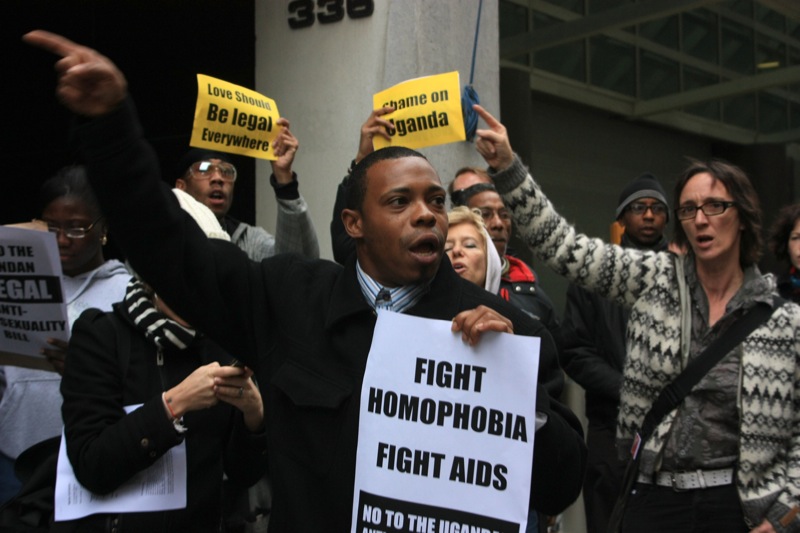
Ugandan Anti-homosexuality act Protesters, NYC ©Kaytee Riek https://www.flickr.com/photos/riekhavoc/ CC BY-SA 2.0

The 2016 review distinguishes between the “social” and “non-social” hypotheses for the causes of sexual preference. Social explanations perceive sexuality as a result of environment. Early sexual experiences and cultural acceptance of homosexuality being some examples. Non-social explanations focus on the idea of sexuality being pre-determined, including genetic theories. It is important here to express that neither explanation can be validated by the lack of evidence supporting the other. Either scientific hypothesis must be supported by its own evidence when evaluating its validity.

The prevalence of non-heterosexuality in society is a question repeatedly put to science. Early  surveys in the 1940’s by Alfred Kinsey produced the notion that “10% of people are homosexual”, a common assertion until modern surveys presented new data. Large scale surveying later occurred in the 1980s in a medical push to inform on the AIDS epidemic. These studies, although focused more on sexual activity than orientation, estimated non-heterosexuals contribute approximately 4% of the population. Recent surveying and the first non-Western study (Samoan males) gave similar estimates. This subject often becomes cluttered by different sampling methods, definitions and focuses leading to a range figures being produced. However, some conclusions can be made with confidence. Notably, non-heterosexuality has contributed a small minority of Western society since the 40s that has stayed consistent despite much increased tolerance.
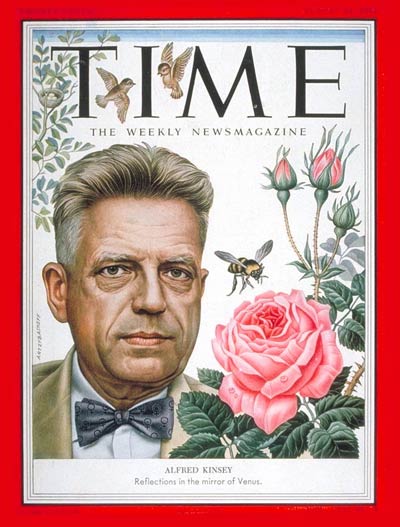
Alfred Kinsey, one of the most influential sexuality researchers, on a cover of TIME.

The role of hormones in sexuality is of scientific interest. One potential theory is the organisational theory. This suggests a link between sexuality and developmental hormones, particularly in forming the brain. Studies into other species have shown differences in some regions of the brain can pertain to different sexual behaviours. Namely, male mice showing female mating behaviours and male sheep mounting exclusively other males. Limitations in this area include: the measures used (i.e. mounting) are not well mapped to human sexuality and  it would be expected that developmental hormones would lead to more physical differences.

Molecular studies have looked at identifying any genetic differences between individuals of different sexuality. A series of sibling studies by Dean Hamer in the 90s looked into the heritability of sexuality. He looked to find chromosomal regions consistent throughout 40 pairs of homosexual brothers. His results showed a shared region on the X chromosome. He also suggests that homosexual men are more likely to have homosexual male relatives on their mothers’ side. However, the sample size of this study was small, and replications did not yield the same results, indicating a larger scale study may be needed to identify any differences. 23andme carried out a larger study. They conducted a Genome-wide association study on almost 24,000 people of varying sexual orientations and found no significant effects.

Genetics company that used databases to research sexuality

Sexuality has also been considered from an evolutionary perspective, looking into the benefits of same sex attraction. In these examples rather than modelling human sexuality, they used androphilia and gynephilia (meaning attraction to males and females respectively). The first theory was one of kin selection, and the role of androphilic males in a family group. It is suggested that androphilic males could improve the reproductive success of other family members. Evolution should not be considered as affecting a group, rather each individual separately. The benefit here would be to the androphilic males’ mother, who may improve other offspring’s fitness (and therefor her own) through having an androphilic son. Some research has been carried out into this topic, but the theory is not largely supported.

An alternative theory is that a gene for androphilia is sexually antagonistic. This means that both males and females may be carriers, however is reproductive benefit to females but a fitness cost for male. This has been supported by studies in Western populations that showed females with androphilic sons or nephews express an increased reproductive rate. However, the evidence is inconclusive, Western societies have much lower reproductive rates than would have been typical for much of human evolution. Additionally, specifying female relatives ignores effects male ancestors have on the genetics of the androphilic males. This theory and kin selection both struggle to explain balancing the fitness cost that comes with having a non-reproductive child.

Science does not have a definitive answer to many questions surrounding sexual orientation. Neither causes or evolution of non-heterosexuality have been fully explained. It has been shown to be a constant in human society. The more important questions, in my opinion, are matters of philosophy and ethics. Future research needs to be careful of what questions they are asking. It is an important subject to research to aid understanding and support the politics of LGBTQ+ acceptance, however it is crucial to consider the safety of the community. Research that could potentially be misinterpreted or used maliciously to support anti-LGBTQ+ actions needs to exercise caution in presenting data and conclusions.

The Evolution of Poison Frog Warning Colours

The evolution of polymorphism in the warning coloration of the Amazonian poison frog Adelphobates galactonotus

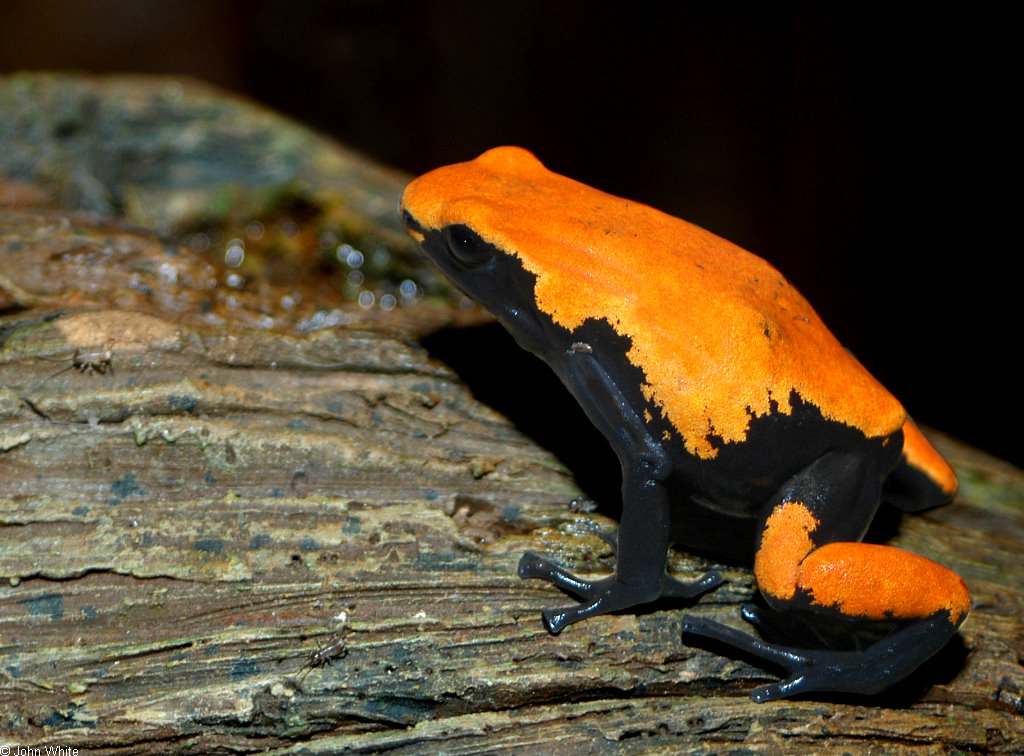
Photo of Adelphobates galactonotus, © 2004 John White

In November 2019, Heredity published the work of Diana Rojas and colleagues which explored the evolutionary origins of warning colourations in the Amazonian poison frog (Adelphobates galactonotus in Latin). I found this paper when reading around the subject for my own project (which you can read more about here). The different colour types provide an insightful tool into assessing relative contributions of natural selection, genetic drift and geographic distributions to how this trait evolved. Colour as a trait has long since been a key factor in clarifying our understanding genetics and evolution, going back to fundamental principles of genetics.

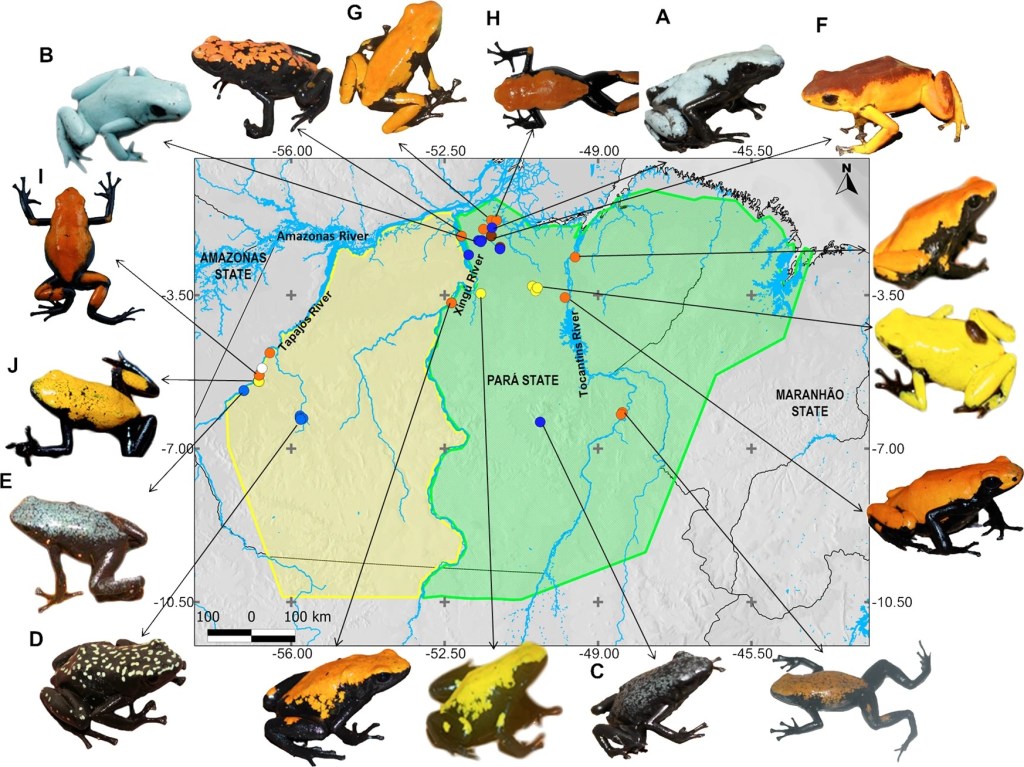
The study species of poison frog, A. galactonotus, are usually grouped into colour categories of yellow, orange, blue, red, and brown. The colour of the frogs is a warning signal to predators, advertising their toxicity. Interestingly multiple frog colours are not observed in a single area. A single population will consist of only one of the colour categories. Found in east Amazonia, this species does not show clear boarders in colour (i.e. blue in west, yellow in east, etc…) instead forming a mosaic pattern. Below is a figure from the paper which shows the sampling areas split east and west by the Xingu river and demonstrates the mosaic pattern of colour distributions.

This map shows the sampling locations of A. galactonotus in the study represented by circles coloured to match the frogs found there. Images of the colour/patterns are labelled to the sample sites they were found at.

The paper looked to combine genetics and geographic factors with colour data to test three hypotheses:

  1. The colour diversification of A. galactonotus occurred at the same time as colour diversification in other neotropical frogs.
  2. The same colouration may have evolved multiple times in different locations, independently of each other.
  3. There is a selection pressure acting on frog colour driving the evolution of the trait.

The study used a spectrophotometer to re-assess their measures of colour, much like I intended to do with my own research project. The benefit of this compared to judging by eye is that you are able to take the data given on what wavelengths the frogs reflect and apply this to models of vision for predators (birds) or the frogs. This is a more effective approach as it is more representative of the natural systems colour traits have evolved in.

What they found was that A. galactonotus colour can be cut down to four categories. No longer classifying any as red. The data grouped the frogs into yellow, orange, blue or brown. There were no frogs that fell in between these colour groups. They did note that within the blue category there was substantially more variation in both colour as well as in the pattern of their colours. Consistently with previous studies, frogs from a single population all fell within the same colour category. It was also found that both frogs and birds would be able to distinguish between the four colours, with birds more able to recognise more subtle variations in colour.

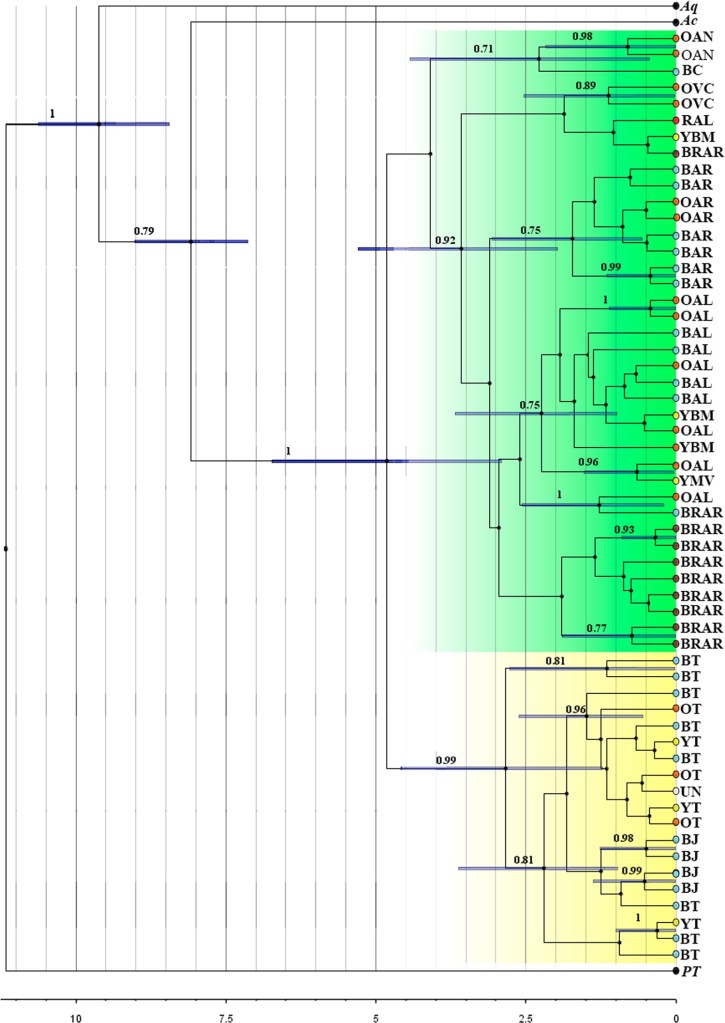
Looking at genetics, they looked to track the divergence of A. galactonotus and see if it matched with how colour was distributed, but they found no strong link between the two. They also used the genetic data to produce a tree which mapped the divergence, showing were different populations separated out from each other (shown below). A key observation from this being that there are two distinct groups formed equating to either side of the Xingu river. This suggests the river acts as a barrier to genes spreading among the species.

This diagram shows the most probable divergance history of A. galactonotus. The smaller the branch the more recent the separation between populations or groups (formally called clades). The circles at the end of a lineage represent a population and are coloured with colour of the individuals. The first letter of the label for each population also reflects the colour. The numbers on the branches are a measure of how confidently they can say that a separation occurred at that point, with “1” being full confidence. The top “Aq” and “Ac” represent closely related species (they are also in the Adelphobates genus), and the bottom “PT” represents a less closely related poison dart frog. These are on to act as checks to validate the tree. As they are different species you know that they should be the first divisions on the tree as they will be less closely related that any individuals that are of the same species.

To summarise their findings, they did not identify a relationship between the population genetics and distributions of colour, and instead that geographic distributions and occasions of isolation were more closely related to the genetic structure. They were unable to find that colour was under selection, suggesting much of the colour variation is the result of relatively recent colour mutations becoming fixed (found in all individuals) within the populations they arise in. The model of the evolutionary history suggests that any large-scale genetic divergence that would be associated to colour would have occurred within the Pleistocene (2,580,000 to 11,700 years ago).

The paper offers some further direction leading on from the work that they have done, centring around the idea of the mosaic colour distributions, and asking the question: What is stopping these different colour populations from breeding with each other if they are so close together? From their results showing that the frogs would be able distinguish between colour categories, they suggest that assortative mating by colour has become beneficial, suggesting that colour hybrid offspring may be less likely to survive. They also suggest that further work into identifying if polymorphisms (variable traits) are precursors to speciation (the process of one species separating into two) which is a key theme of my own project.

Useful Links:

The paper – limited access: https://www.nature.com/articles/s41437-019-0281-4

IUCN Red List – Conservation information: https://www.iucnredlist.org/species/55185/11253730

First Image Link: https://calphotos.berkeley.edu/cgi/img_query?seq_num=153830&one=T

My Research Project

Shell Patterns and Populations of Japanese Island Snails

Studies into the evolution of variable traits is crucial to cementing our understanding of evolution. The applications of which are instrumental in protecting the natural world. My research looks into a potential relationship between the patterns seen in Japanese island snail shells and how the snails are distributed across their habitat. This project looks to highlight how evolution, in relation to an individual’s appearance, can shape populations.

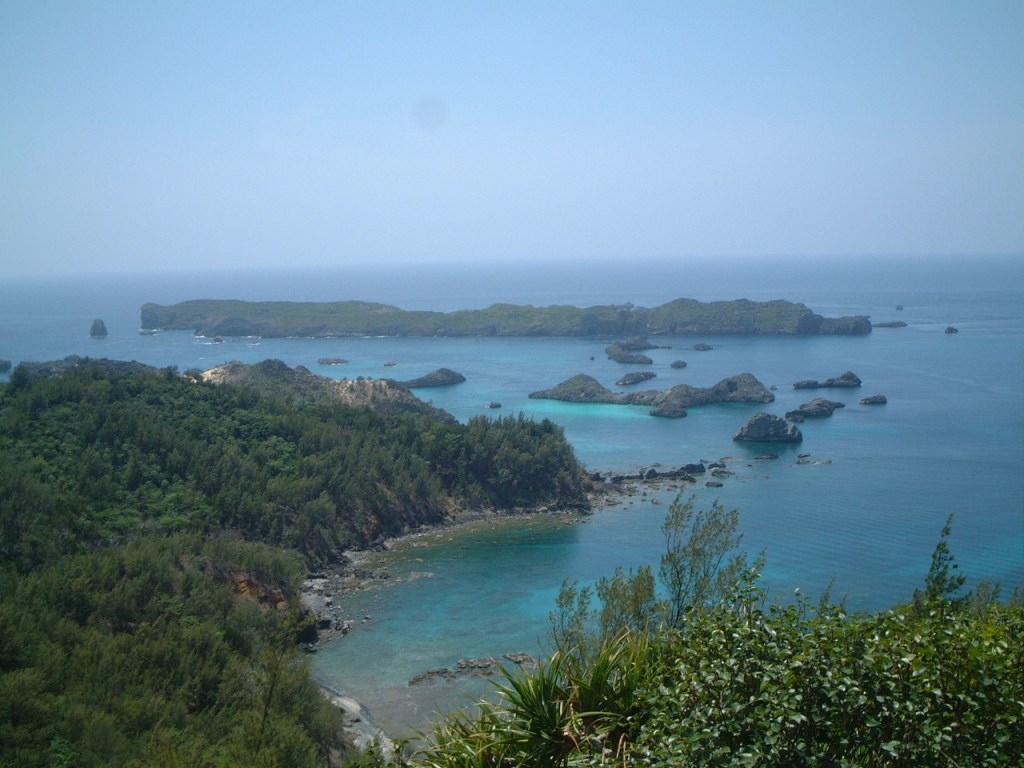
To give some context to the project the study species was selected due to unique scenario presented by the islands they are found on. The Ogasawara Archipelago, also called the Bonin Islands, are located approximately 1000km south of Tokyo. The name “Bonin” comes from the Japanese “bunin” to mean uninhabited or “no people”. Whilst this name may no longer be entirely accurate, many of the islands are now inhabited, the primary island looked at by this study has been relatively unaffected by humans. Mukoujima island is currently not occupied by humans, this has been the case for most of its history prior to WW2. During the war the islands were used as part of a Japanese military base. This relative isolation makes the islands an interesting place to study evolutionary and ecological processes with reduced human influence.

An image from the Ogasawara Archipelago taken by my supervisor Angus Davison when sampling with Satoshi Chiba.

The island snails are interesting for a number of reasons. Interest in the Genus (Mandarina) as a whole comes from the adaptive radiation (where one ancestral species rapidly diversifies into multiple species to occupy new niches) seen in their evolutionary history. In the case of Mandarina, a Japanese mainland species found its way to Ogasawara and went from one to 14 species.

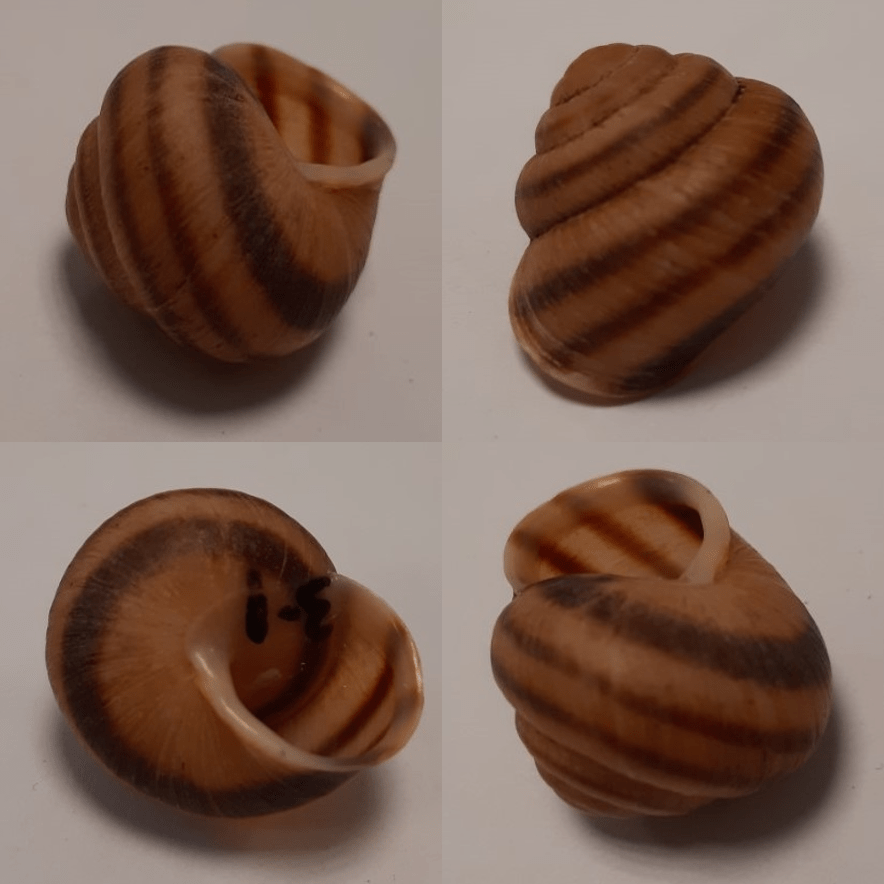
The species Mandarina ponderosa (From now M. ponderosa) is the primary focus of the study and the sole Mandarina inhabitant of our island of choice, Mukoujima. Shells of the species, as well as genetic data, were collected by my supervisor Angus Davison and collaborator Satoshi Chiba (meaning my project did not involve a trip to Japan). The shells of these species usually have three dark bands running over a lighter base colour that follow the spiral of the shell. Variation can be seen in the thickness of these bands, sometimes being so thick bands merge, or in other cases a band may not show at all. This variation may have an impact on the predation of these snails as well as how they interact with each other.

Images of the shells to show the typical banding pattern M. ponderosa displays.

Initially the project was going to look at the colour of shells using a spectrophotometer. This is a machine that gives a reading of an objects colour by shining a pure white light at it and measuring what wavelengths of light are reflected. This research would have followed the trend in measuring reflectance to categorise colour in an unbiased way (preferable over judging by eye) which has been carried out previously with other snails. Unfortunately, this project did not come to fruition due to the spectrophotometer needing a part replaced that could not be fixed in time. For me to use.

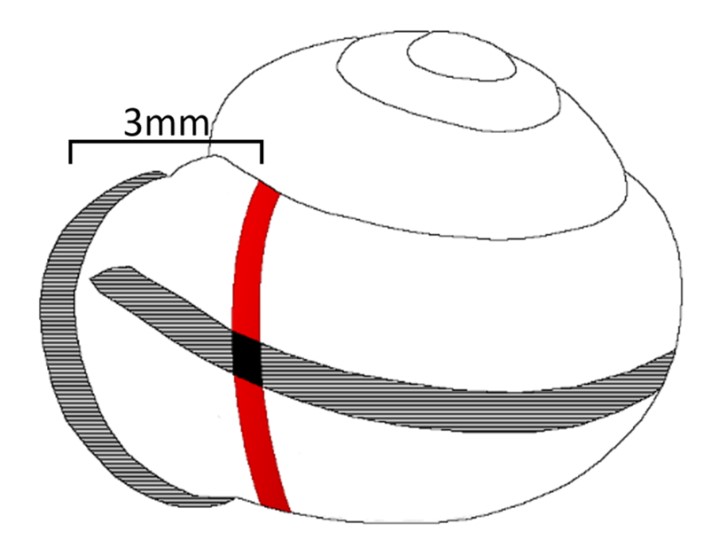
Unable to measure colour, I used banding pattern as an assessment of variation in shell patterns. Pattern and contrast may be key in the perception. As the shells vary in shades of brown, banding maybe more definitive in categorising the shell variation. To measure the bands, I used a simple but effective method to collect data devised by Hannah Jackson, a PhD student carrying out similar research. Snail shells have growth ridges that wrap perpendicular the spiral of the shell, forming as part of how the shell is developed. We placed a thin piece of electrical tape around one of these ridges 3mm away from the lip of the shell and marked the start and end of each band across the tape as well as the end of the growth ridge.

A drawing of a face

Description automatically generated
A figure produced by Hannah Jackson showing the method the Lab uses for measuring the banding pattern. The red indicates the tape, the striped areas show the lip (far left) and a band running along the shell.

Currently all the data has been collected (just shy of 500 snails) and I am about to carry out all the data analysis. The first step in this will be using two pieces of software, STRUCTURE and genepop, to analyse the bank of genetic data giving insight into the population structure of M. ponderosa on Mukoujima. I will also be looking to see if there are any ways to group different banding patterns. Once the these are defined, I will look to see if there is a significant relationship between the two. I will also implement other data that has previously been collected such as habitat and size.

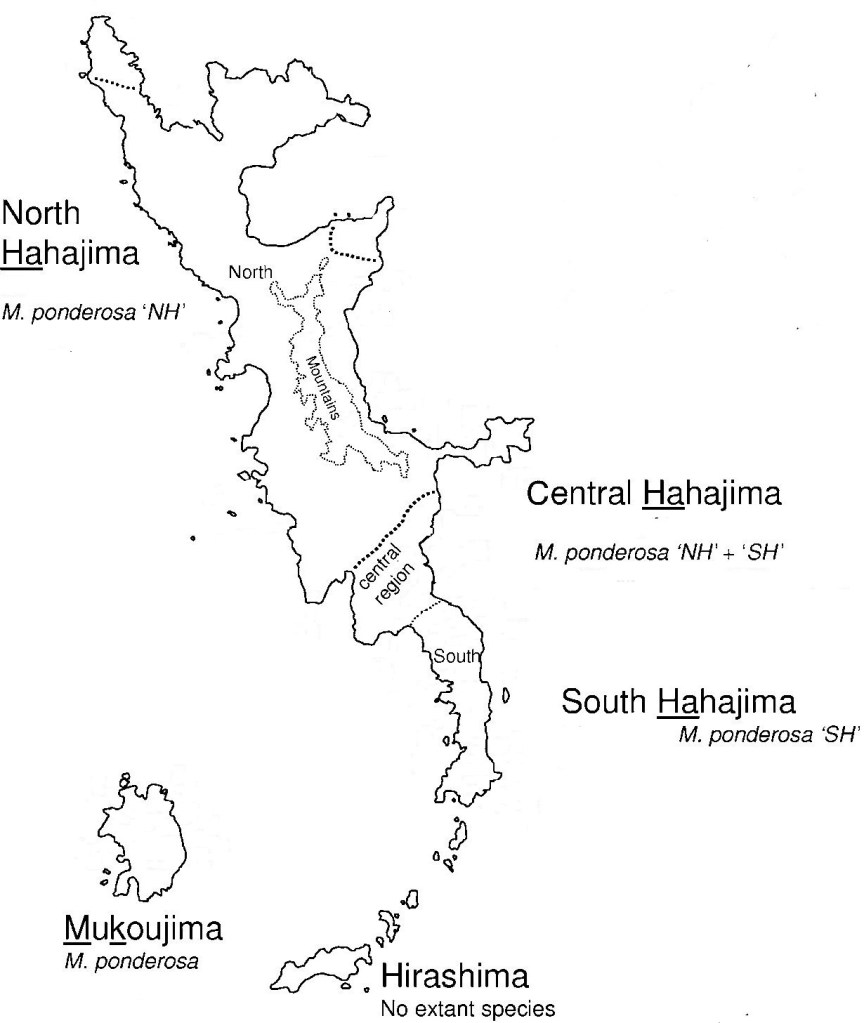
The final step in my project is to take the coordinates of the sample sites on the island and produce a number of maps that display how the different traits of M. ponderosa are distributed across Mukoujima. These maps may help reveal new patterns and create directions for further research.

A map of the areas M. ponderosa is found on. Taken and edited from a paper Angus and Satoshi published in 2006 (link at end).

Now the spectrophotometer has been fixed, the next step would be to collect the colour data we originally set out for and see how that relates to the genetic data, as well as the data that I have collected on banding pattern. Following this, similar methodologies can be applied to other Mandarina to get a greater picture of the evolutionary dynamics of snails in the Ogasawara archipelago.

Useful Links:

Angus Davison and Satoshi Chiba on the Mandarina genus: https://onlinelibrary.wiley.com/doi/abs/10.1111/j.1365-294X.2006.02990.x

Angus Davison, Hannah Jackson, Ellis Murphy and Tom Reader on measuring shell colour: https://www.nature.com/articles/s41437-019-0189-z

Angus Davison Lab: https://www.angusdavison.org/index.php/research

Design a site like this with WordPress.com
Get started